
Publications
The Militarisation of Civilian Infrastructure in North Kordofan: Patterns, Implications and the Impact on Civilians
Download the documentPDF · 4.6 MB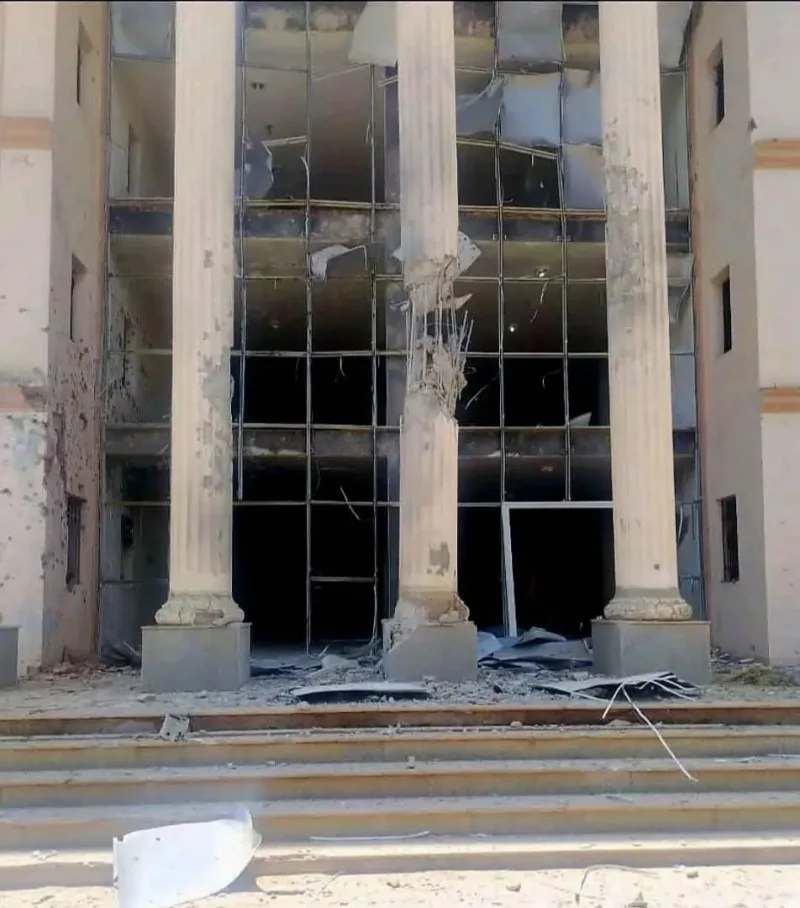
Executive summary
This report by the Sudanese Alliance for Rights (SAR) examines the reported militarisation of civilian infrastructure in Sudan's North Kordofan State amid the ongoing armed conflict between the Sudanese Armed Forces (SAF), the Rapid Support Forces (RSF), and their allied groups. Drawing on field documentation, open-source investigations, incident reports, and publicly available information, the report identifies a pattern of civilian facilities being occupied, converted, or used for military purposes between 2025 and 2026.
The documented cases include the reported use of Al Qubba Primary School and the Olympic Stadium in El Obeid as military headquarters, accommodation facilities, and weapons and ammunition storage sites. Other cases involve the reported accommodation of senior Joint Forces commanders at Al Qadaiya Hotel, allegations of military use of the Social Security Hospital, the use of Station 13 in Al-Wohda as an RSF military base, military activities within the Um Rawaba City Court Complex, and the risks facing civilian neighbourhoods surrounding the Fifth Infantry Division.
The report examines the implications of these practices under international humanitarian law (IHL), particularly the principles of distinction, proportionality, and precaution, as well as the special protection afforded to medical and educational facilities. It highlights how military activities within civilian environments can expose residents to foreseeable harm, contribute to civilian casualties and displacement, damage essential infrastructure, and disrupt access to education, healthcare, and justice.
The report also emphasizes that the military use of civilian infrastructure does not automatically make every facility a lawful military target, nor does it make every subsequent attack lawful. Each incident must be assessed individually under international humanitarian law. Parties using civilian infrastructure for military purposes retain obligations to protect civilians, while attacking parties must independently comply with their legal obligations.
SAR calls on all parties to the conflict to cease using civilian infrastructure for military purposes wherever feasible, remove military personnel and weapons from civilian facilities, relocate military objectives away from populated areas, and ensure independent investigations into reported incidents. The report further stresses the importance of preserving evidence, identifying individual and command responsibility, and strengthening accountability mechanisms to prevent further harm to civilians.